

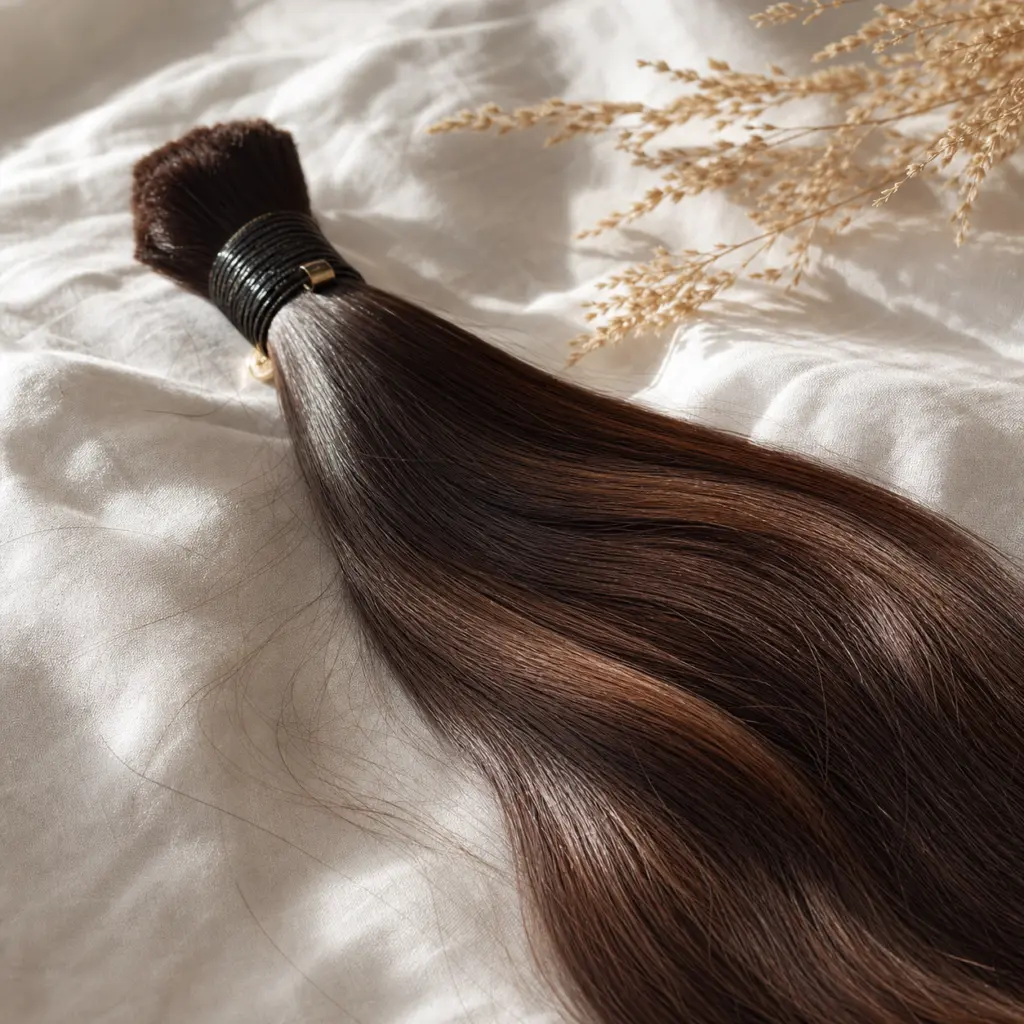
Remy hair is 100% real human hair where the cuticles are kept intact and aligned in one direction, from root to tip. “Remy” is a quality grade — not a brand name, not a synthetic fiber, and not hair that only looks natural.
If you are shopping for human-hair dreadlock extensions, it is easy to assume “Remy” means a special product line or some hair-like material. It does not. Remy human hair is simply real human hair kept in a more organized, less damaged state, which helps it stay smoother and tangle less over time. It is the same grade of hair we use for our human hair dreadlock extensions.
Is Remy Hair Real Human Hair?
Yes — Remy hair is real human hair. This is the biggest point of confusion for first-time buyers. The word “Remy” does not mean synthetic, and it does not mean “fake hair made to look natural.” It refers to real human hair whose cuticles are still present and kept facing the same direction.
That is why the phrase “Remy human hair” tells you two things at once. “Human hair” tells you what the material is. “Remy” tells you about the quality and alignment of the hair’s outer layer.
Synthetic fiber is different because it is a manufactured material rather than human hair. That does not make it wrong for every use — it is simply a different option for different needs and budgets, which is exactly why we also make synthetic dreadlock extensions.
What Does “Remy” Actually Mean?
To understand Remy hair, it helps to understand the word cuticle. The cuticle is the outer layer of the hair strand, and in genuine Remy hair those cuticles stay intact and aligned from root to tip.
Why does that matter in real life? When hair strands are mixed in different directions, the cuticles rub against each other unevenly and create more friction. That extra friction is one reason non-aligned hair is more likely to snag, tangle, and mat.
When the strands all run in the same direction, the hair behaves more naturally. In practical terms, that usually means:
- Less tangling than non-Remy human hair
- A smoother, more natural feel
- Better movement and a more even surface
- Longer wear than lower-grade, mixed-direction human hair
A simple way to picture it: imagine tiny roof shingles all lying the same way. When they are aligned, the surface stays smooth. When some are flipped around, they catch on each other. Hair cuticles work in a similar way.
“People hear ‘Remy’ and think it’s a brand or a clever fiber. It isn’t. It’s real human hair with the cuticles kept aligned — that single detail is why it lasts, moves, and blends like your own hair.” — Danila Deriabin
Remy Human Hair vs Non-Remy Human Hair vs Synthetic Fiber
| Hair type | Real human hair? | Cuticles aligned? | Tangling | Lifespan | Heat-style / dye? |
|---|---|---|---|---|---|
| Remy human hair | Yes | Yes | Usually lower | Longer than non-Remy | Yes — it is real hair |
| Non-Remy human hair | Yes | No — directions are often mixed | Usually higher | Generally shorter | Yes, but results less predictable |
| Synthetic fiber | No — a manufactured fiber | N/A | Varies by fiber | Varies | Limited vs human hair |
Why Remy Hair Matters for Dreadlock Extensions
Dreadlock extensions are not styled once and left untouched. They are worn, moved, handled, and expected to keep looking natural over time. Because of that, the underlying hair quality matters more than many first-time buyers realize.
For dreadlock extensions specifically, genuine Remy hair helps in several practical ways:
- Natural movement — Remy hair behaves like human hair because it is human hair.
- Better blending — preserved, aligned cuticles help the hair blend with your own.
- Lower tangling — aligned cuticles reduce friction compared with mixed-direction hair.
- Styling flexibility — it can generally be heat-styled and dyed like other real human hair.
- Longer-term wear — genuine Remy hair typically outlasts non-Remy human hair.
This does not mean every customer needs the same material. Some people prefer human hair for realism and flexibility; others choose synthetic for a more accessible price point. If you are weighing both, our guide on human hair and synthetic dreads breaks down the trade-offs. The important part is knowing what “Remy” actually means before you buy.
How to Tell If Hair Is Genuinely Remy
There is no single magic test, but there are a few practical ways to shop with more confidence.
1. Look for clear wording
Good listings say exactly what the hair is. Phrases like “100% Remy human hair,” “cuticles intact,” and “cuticles aligned root to tip” are more meaningful than vague claims such as “Remy feel” or “natural-looking fiber.”
2. Ask direct questions
A seller should be able to answer simply: Is this 100% human hair or a blend? Are the cuticles intact and aligned in one direction? When a brand can explain the difference between human hair, Remy hair, and synthetic fiber in plain language, that is usually a better sign than buzzwords alone.
3. Use a basic direction check
One commonly suggested check is to gently slide your fingers down the strand and then back up. If it feels smoother one way and slightly rougher the other, that can indicate the cuticle direction is still present.
Still deciding which material fits your goals, budget, and styling routine? Start by comparing texture and maintenance — and if you want a precise colour and texture match, email our team and we’ll help you choose. New to installs? The DaddyDread Academy walks you through it step by step.